The short answer
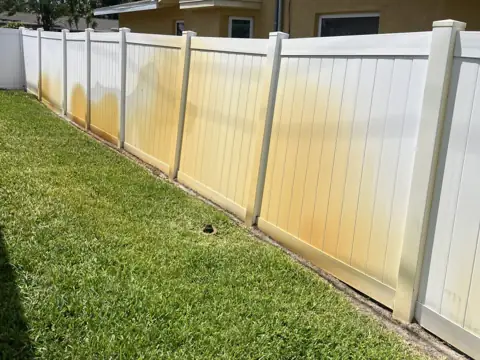
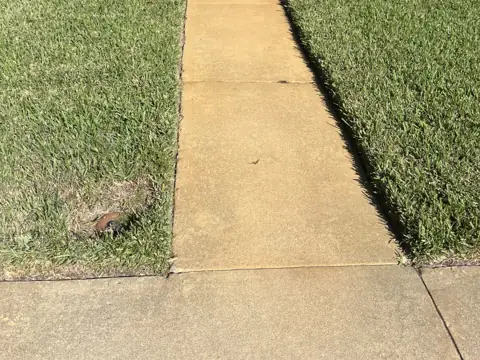
Fertilizer rust stains and sprinkler rust stains are both iron, but they look different. Fertilizer stains are small orange dots, specks and drips where iron-containing granules or spray landed on concrete. Sprinkler rust is a broader band, fan or haze that matches where the heads spray and builds up over months. Both respond to a rust treatment, but only sprinkler rust keeps coming back from the water itself.
How to tell them apart
Fertilizer stains
- Small, distinct orange dots or freckles, sometimes with a darker center where a granule sat.
- Concentrated near lawn and bed edges where the spreader overthrew onto the driveway or sidewalk.
- Appear suddenly, a day or two after fertilizing and watering or rain.
- Do not line up with sprinkler heads.
Sprinkler rust
- A continuous band, fan or tint rather than individual dots.
- Matches the arc of specific heads; darkest where the spray hits hardest.
- Builds gradually over weeks and months.
- Shows on vertical surfaces too: fences, walls, sign bases.
- Linked to well-water irrigation.
Metal rust
- Shaped like the object: a planter ring, chair feet, a tool, a nail.
Why fertilizer leaves rust spots
Many lawn fertilizers include iron because it helps turf green up. When granules land on concrete and get wet, the iron dissolves and oxidizes right there, leaving a spot. UF/IFAS research on palm fertilizers also notes that most iron fertilizers cause brown staining. The spots are a cosmetic issue, but on light concrete they are very visible.
When you have both
Many Tampa Bay properties have both: a sprinkler rust band along the edge of the driveway with fertilizer speckles scattered across it. The good news is that a rust treatment made for concrete addresses both kinds of iron in the same visit. The difference is what happens next.
Preventing fertilizer stains
- Use a spreader with an edge guard or deflector along hardscape.
- Blow or sweep granules off concrete back onto the lawn before watering.
- Apply when the concrete is dry, and do not let irrigation run before cleanup.
- Ask your lawn service to keep product off driveways and walkways.
Florida and many local governments also have fertilizer rules, including seasonal restrictions on certain nutrients in some counties. Check your county’s current ordinance.
Preventing sprinkler rust
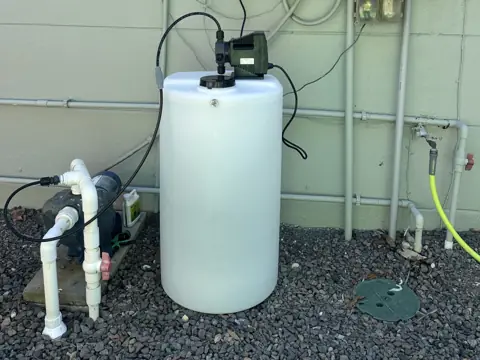
Sprinkler rust comes from the water, so it needs a different fix: adjust heads off hardscape, and if your irrigation runs on a well, treat the water with an irrigation rust prevention system. See what causes orange sprinkler rust stains in Florida for the background.
Removing either kind
Pressure washing usually lightens iron stains without removing them. A remover made for rust on concrete dissolves the iron, with care on colored, sealed or stone surfaces. Our driveway rust guide covers DIY basics, and driveway rust stain removal covers how we handle it.