The short answer
A rust prevention system needs slightly different attention through the year, because Florida irrigation changes with the seasons. Watering usually increases in the dry months, drops off when summer rains take over, and can be reshaped at any time by water restrictions, power outages and storms. Keep the system powered, keep the tank from running low, and make sure the dosing follows whatever your irrigation schedule is doing now.
Every month
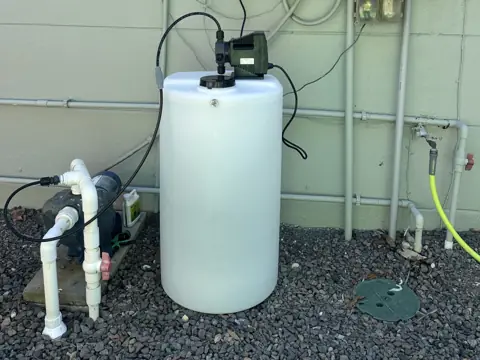
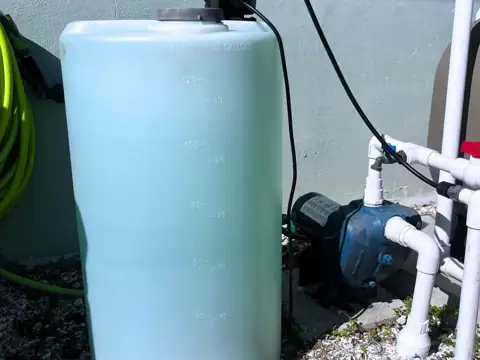
- Glance at the solution level. A sudden drop usually means more water is running than normal.
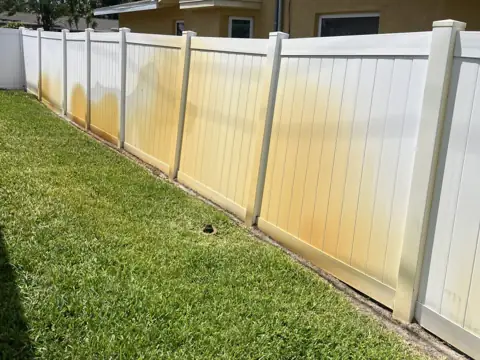
- Walk past the surfaces that used to stain worst. New orange is the earliest warning.
- Check that the pump area is clear, the lid is on and tubing is not kinked or cracked.
- Let your service company know about any irrigation changes before the next refill.
We offer monthly refills and checks as our standard plan, and the general between-refill checklist covers the basics. This guide is about what changes with the calendar.
Dry season (roughly late fall through spring)
UF/IFAS notes that about half of Florida’s rainfall comes from June through September, so the rest of the year relies more on irrigation.
- Expect higher solution use. More watering means more water to treat.
- Watch for schedule changes. Many homeowners and landscapers increase run times as the weather dries out.
- Check for new heads and zones. Fall and spring landscape projects often add irrigation.
- Look for leaks. Broken heads that run constantly can empty a tank quickly.
When watering restrictions change
Water management districts and local governments can restrict watering days and hours during droughts. In 2026, for example, the Southwest Florida Water Management District put a Modified Phase III water shortage order in place limiting most lawn watering in its region to one day per week, and extended it through October 1, 2026. Restrictions change, so check WaterMatters.org and your city or county for the rules that apply to you now.
- Tell your service company when your watering day or hours change. Dosing is set around your schedule.
- Expect lower consumption while watering is restricted, and higher again when restrictions lift.
- Reset the controller carefully when rules change, and confirm the pump still runs with the new schedule.
Rainy season (roughly June through September)
- Expect lower solution use if your rain sensor or smart controller skips cycles. This is normal.
- Do not assume the system is broken because the tank level barely moved. Confirm the pump still runs when a zone does.
- Clear the area around the tank of runoff, debris and grass clippings.
Hurricane season and power outages
- Before a storm: make sure the tank lid is secure and nothing nearby can fall onto the pump or tubing.
- After an outage: check that the pump has power again and that a breaker has not tripped. Controllers can lose or reset their schedules after outages; confirm the watering days and times.
- After flooding or debris: look for damaged tubing or a shifted tank, and call before running the system if anything looks wrong.
Once or twice a year
- Retest the water if staining changes or a well was serviced.
- Review the watering schedule with your landscaper and service company together.
- Spot-remove any light staining before it builds up.
What not to do
- Do not change the pump’s dosing settings yourself.
- Do not add other chemicals to the tank.
- Do not unplug the pump to save power; it only runs with the irrigation.
If something seems off, our repair service diagnoses systems from any installer.
Sources: UF/IFAS Extension SS587, “Maximizing the Benefits of Reclaimed Water” (rainfall timing); Southwest Florida Water Management District, water shortage order announcements, 2026.