The short answer
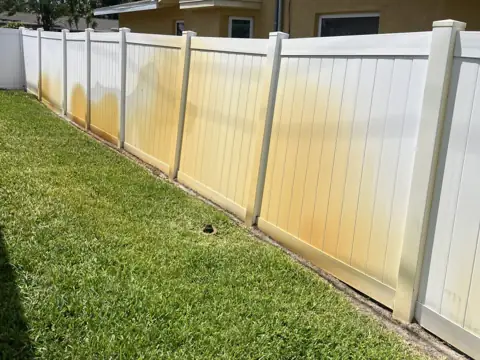
When a rust prevention system runs out of solution, the irrigation keeps running but the water going out is untreated. On iron-rich well water, new orange staining starts forming in the spray pattern again, sometimes within days on surfaces right in front of the heads. The system does not damage anything by running empty, but the staining that forms while it is empty has to be removed separately. Refill it, find out why it ran out, and get the dosing back on schedule.
What happens when the tank is empty
- Untreated water reaches your surfaces. The iron is no longer kept from oxidizing, so it stains like it did before the system was installed.
- Staining comes back where it was worst. The spots that stained fastest before, like a fence panel facing a rotor, show it first.
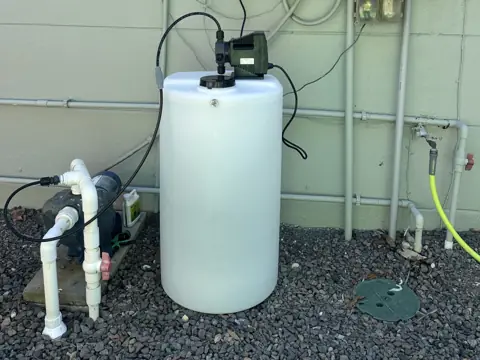
- A pump may keep running dry. An injection pump on an empty tank can draw air. Check the tubing for air and loss of prime when it is refilled.
- Speed depends on your water. High iron and long run times show orange faster than low iron and short zones.
Why systems run out early
On a normal schedule, the tank should not run dry between refills. When it does, something usually changed:
- A broken line or head. A cracked pipe or a stuck zone runs water constantly, and the system treats all of it.
- Longer or more frequent watering. A new schedule, a controller reset after a power outage, or a seasonal change means more water to treat.
- Added zones or a new irrigation install. More heads, more water, more solution.
- Dosing set too high for the current schedule.
- A leak at the tank or tubing. Solution that never makes it into the line.
What to check first
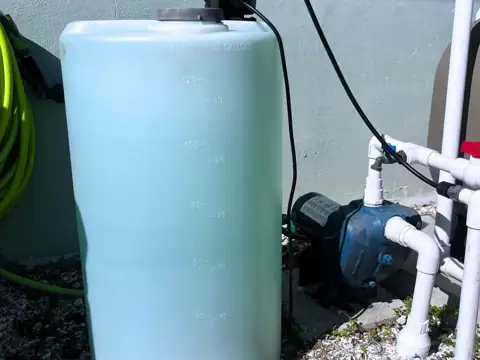
- Look at the tank. Is it empty, or does it still have solution while staining returns? Those point to different problems.
- Walk the irrigation. Look for wet spots, geysers, constantly wet areas or a zone that will not shut off.
- Check the controller. Confirm the watering days and run times are what they should be, especially after a storm or outage.
- Check the pump. If the tank is full but stains are returning, the pump may not be running or drawing. See prevention system repair.
- Call your service company. Do not refill with anything other than the solution the system uses, and do not change the dosing yourself.
What about the stains that formed?
Prevention stops new staining; it does not reverse what formed while the tank was empty. Light, recent staining is usually easy to remove. The longer a system sits empty, the more buildup there is to clean. That is one more reason to catch an empty tank early.
How to avoid it
- Stay on a refill schedule. On a monthly plan, we refill and plan visits around how fast your system uses solution.
- Tell your service company about changes. New watering days, added zones, irrigation repairs and restrictions all change consumption.
- Glance at the tank between visits. A level that drops much faster than usual is an early warning.
- Fix irrigation leaks quickly. They waste water and solution at the same time.
Our guides on how often systems need refills and what to watch between refills go further. For HOAs and commercial sites with several systems, one refill schedule across all of them is the simplest way to make sure none run dry. See HOA and commercial rust control.