The short answer
The cost of an irrigation rust prevention system has two parts: the installation, and the ongoing cost of solution and service to keep it working. Neither has a single price, because both depend on how much water your irrigation uses, how many wells or pumps you have, the iron in your water and how the equipment needs to be installed. The fastest way to an accurate number is a water test and a look at your irrigation setup, which we do for free.
The two costs to plan for
Installation
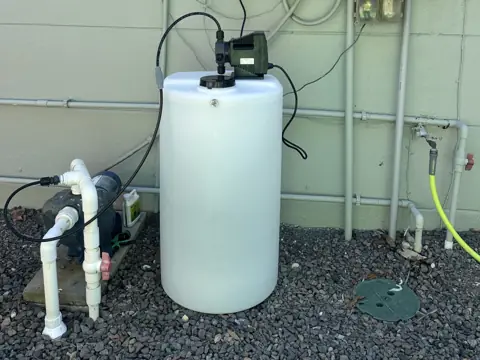
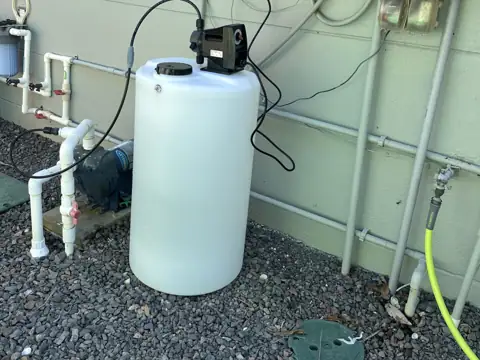
The one-time part: a solution tank, an injection pump or other feed method, the connection into your irrigation line, wiring so treatment runs only when the irrigation does, and setting the dosing to your watering schedule. What drives it is mostly the site, not the brand of equipment.
Operating cost
The recurring part: the rust-control solution the system uses and the visits to refill the tank and check the pump, tubing and dosing. A prevention system only prevents stains while it is running correctly, so this is not optional the way a car wash is optional. It is what you are actually buying.
What affects installation cost
- Number of wells or irrigation pumps. Each water source that feeds sprinklers needs its own treatment point.
- Equipment location and access. A pump next to the house with power nearby is simpler than equipment in a far corner of the property.
- Electrical setup. The injection pump has to run when the irrigation runs. How that is wired depends on your pump and controller.
- Feed method. A metering injection pump and a simpler suction-feed setup cost and behave differently. We compare them in injection pumps vs. siphon systems.
- Property size and flow. A large HOA or commercial site moves far more water than a single home and may need larger tanks or more than one system.
What affects the ongoing cost
How fast a system uses solution comes down to how much water it is treating. The main factors are:
- Watering days and run times. More zones running longer means more water to treat and more solution used.
- Iron level. Water with more iron needs more treatment to keep it from staining.
- Season. Irrigation usually runs more in Florida’s dry months than in the summer rainy season, and watering restrictions can change schedules. See year-round prevention maintenance.
- Leaks and broken heads. A broken line or stuck zone pushes water, and solution, through the system for nothing.
- Service plan. We offer a monthly refill schedule and come back early if something empties the tank.
How to compare prevention cost to cleaning cost
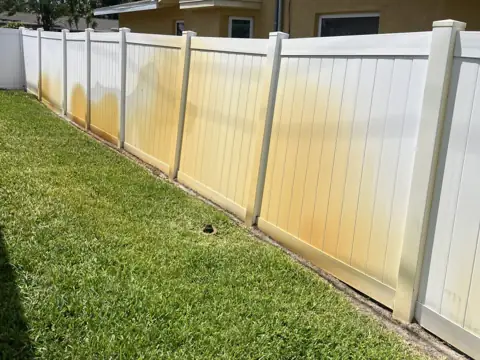
The useful comparison is not “system vs. nothing” but “system vs. what you keep spending to clean.” Without prevention, a property on iron-rich well water tends to need rust removal again and again on the same fence, driveway and walls. With prevention, you clean once and then pay to keep the water treated.
For a home where the stains are mild and the heads can be adjusted away from hardscape, occasional cleaning may genuinely be cheaper. For a property with heavy staining, white vinyl fencing, a new paver driveway or a community-wide problem, prevention usually costs less over time than repeated removal. Our removal cost guide covers the cleaning side.
Questions to ask before you buy
- Has the water been tested for iron, and what was the result?
- How will the dosing be set, and what happens when my watering schedule changes?
- What does the ongoing service include, and how often?
- What happens if the tank runs out early or the pump stops?
- Will you service the system if something breaks? We repair prevention systems from any installer.
Getting an accurate estimate
We start with a free water test, then look at the well, pump, controller and how your zones run. From that we can tell you whether prevention makes sense and what installation and ongoing service will cost for your property. See rust prevention system installation for how the install works, or request a free estimate.