The short answer
Both feed rust-control solution into irrigation water, but they do it differently. An injection pump is a small electric metering pump that pushes a set amount of solution into the line when the irrigation runs, so dosing can be set and adjusted precisely. A siphon (suction-feed) system has no separate pump: it uses the suction or pressure difference created by the irrigation system to draw solution in, so it is simpler, but how much it draws depends on the irrigation’s flow and pressure. Neither is “best” for every property; the right choice depends on the well, the pump and how consistent the irrigation is.
How an injection pump system works
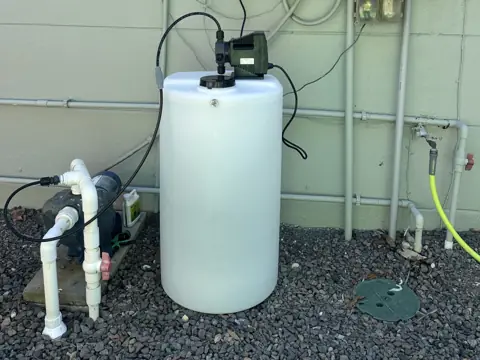
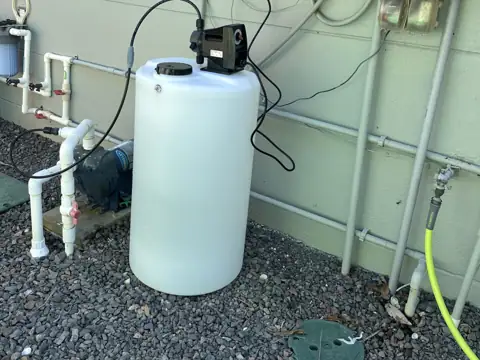
A positive-displacement metering pump draws solution from the tank and injects it into the irrigation line. It is wired so that it runs when the irrigation pump or controller runs. The dosing is set on the pump itself, so the amount of solution per gallon stays relatively steady even if the irrigation changes slightly. UF/IFAS notes that with pump-driven injectors, the delivered rate can still be affected by the pressure in the irrigation line, which is one reason setup matters.
- Strengths: adjustable, repeatable dosing; easy to match to a watering schedule; works across a range of flows.
- Trade-offs: needs electrical power and correct wiring; more components to check (pump, tubing, injection fitting).
How a siphon or suction-feed system works
Instead of a separate pump, the solution line is connected so the irrigation system itself pulls solution in, either from the suction side of the well pump or through a venturi-style fitting that creates a vacuum as water flows through it. When the irrigation stops, the draw stops. The injection rate of a venturi device depends on its size and the pressure difference across it.
- Strengths: fewer moving parts; no separate pump to power.
- Trade-offs: dosing changes when flow or pressure changes; harder to fine-tune; a leak on the suction side can affect the well pump’s performance; less forgiving of zones with very different flows.
Comparing them on what matters
- Dosing control. Injection pumps are easier to set and adjust to a specific schedule. Suction feed follows the irrigation’s hydraulics.
- Consistency across zones. If your zones have very different flows, a suction system may over- or under-treat some of them. A metering pump is less sensitive to that.
- Power. Pumps need power and wiring; suction feed does not need a second electrical device.
- Maintenance. Both need tank refills and tubing checks. Pumps add a pump to check; suction systems add fittings and valves that clog or lose suction.
- Troubleshooting. With a pump, “is it running?” is easy to check. With suction feed, a slow drift in draw rate can go unnoticed until staining returns.
Flow dependency, in plain terms
A prevention system needs to deliver roughly the right amount of solution for the amount of water going out. If a zone is added, a head breaks and runs wide open, or a watering schedule changes, the water volume changes. A metering pump keeps putting out what it is set to, so it may need its dosing adjusted. A suction system changes its draw on its own, which can be helpful or harmful depending on the change. Either way, changes to the irrigation are the most common reason a system that worked stops working.
Which is right for your property?
We install metering injection pumps, because they let us set dosing to your watering schedule and check it easily on every refill visit. That does not make every suction system a bad one. If you already have one and it is keeping your surfaces clean, the main things are keeping it full, keeping the suction tight and adjusting it when the irrigation changes. If it is not keeping up, a repair or a change of feed method may be worth discussing.
Learn more about how we install prevention systems, or read how prevention systems work for the basics.
Sources: UF/IFAS Extension, “Chemical Injection Methods for Irrigation” (WI004); industry venturi injector documentation.