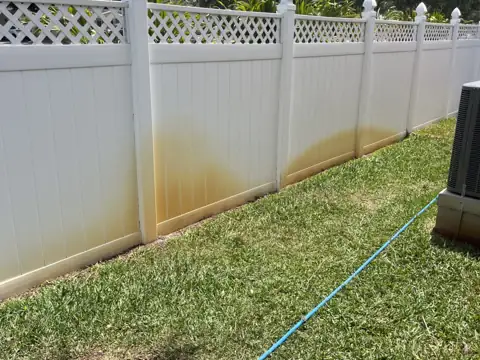
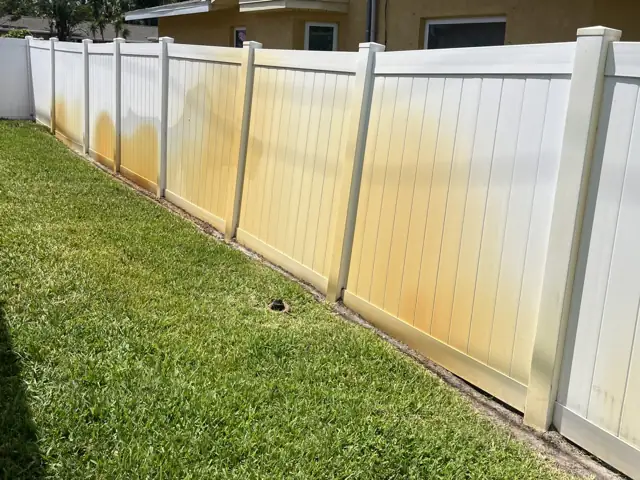
Orange stains around sprinkler zones are one of the most common signs of iron-rich irrigation water in Florida. They often show up first on white vinyl fencing, concrete, pavers, stucco, curbs, sidewalks, driveways, and exterior walls where sprinkler overspray repeatedly lands.
The stains are not ordinary dirt. They are mineral deposits created when iron in the irrigation water is exposed to air and oxidizes on the surface. That is why the staining can keep returning even after the property is cleaned.
Why Florida Irrigation Water Causes Rust Stains
Many Florida properties use groundwater or well water for irrigation. That water can naturally contain dissolved iron. While the water is underground, the iron may not be visible. Once the sprinkler system sprays the water into the air and onto exterior surfaces, the iron reacts with oxygen and begins forming the familiar orange or brown discoloration.
The more often a surface is hit by iron-rich irrigation water, the more staining can build up. A fence beside a sprinkler head, for example, may become heavily stained while another section of the same fence stays clean simply because it is outside the overspray pattern.
Where Irrigation Rust Usually Appears
We commonly see sprinkler rust on:
- Concrete driveways and sidewalks
- Pavers and pool-deck areas
- White vinyl fencing
- Stucco and painted exterior walls
- Curbs and community sidewalks
- Mailboxes, signs, and hardscape features
- Commercial and HOA common areas
Why Pressure Washing Alone Often Does Not Solve It
Because irrigation rust is a mineral stain, simply blasting the surface with water may not remove the iron discoloration. Pressure washing can remove dirt, algae, and loose buildup, but the orange mineral stain may remain embedded in or bonded to the surface.
Professional irrigation rust removal uses a treatment intended to address the iron staining itself rather than relying only on pressure.
Why the Rust Comes Back After Cleaning
If the sprinkler system continues spraying the same iron-rich water onto the same surface, new staining can form again. Cleaning solves the existing stain; it does not change the water causing it.
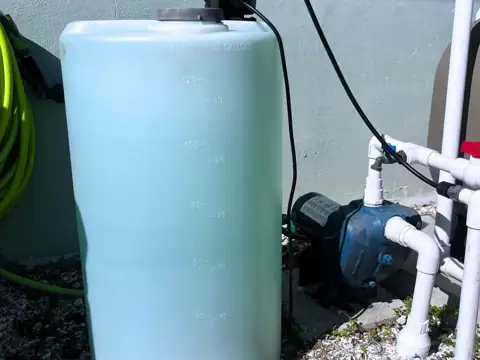
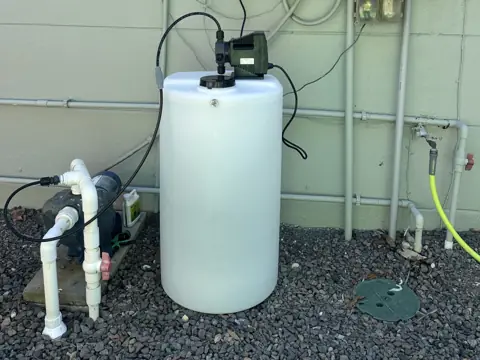
For recurring problems, an automatic irrigation rust prevention system can treat the irrigation water while the sprinklers operate. This is the long-term side of the solution for properties that continually fight orange staining.
Removal vs. Prevention
If your property already has visible orange staining, the first step is usually removal. If the irrigation system continues producing iron-rich water, prevention can then help reduce future staining. Many properties benefit from both: clean the existing surfaces, then address the source.
Serving Tampa Bay
Rust Busters provides irrigation rust removal and prevention throughout Tampa Bay, including Clearwater, Largo, Seminole, and St. Petersburg.
If orange sprinkler stains keep showing up around your property, contact our Tampa Bay team for a free estimate.