The short answer
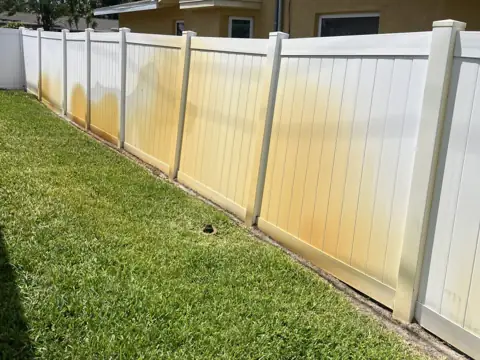
A sprinkler rust prevention system and a water filtration system solve different problems. A prevention system adds a small amount of rust-control solution to irrigation water so the iron in it does not stain surfaces; the iron stays in the water. A filtration or iron-removal system takes iron out of the water, usually by oxidizing it and filtering it, which works well for a house but is a much bigger job at irrigation volumes. For most Florida homes with well-fed sprinklers, prevention is the practical choice for stopping stains; filtration is what you look at for drinking and household water.
The three approaches people mix up
1. Rust prevention (chemical injection)
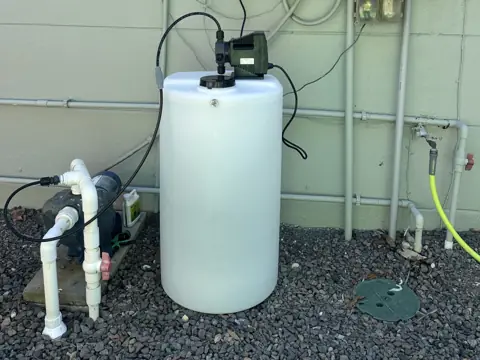
A tank and feed system meter a rust-control solution into the irrigation line while the sprinklers run. The treatment keeps dissolved iron from oxidizing into orange when the water dries on concrete, fences and walls. It is designed specifically for irrigation and runs only when the irrigation does. Water-treatment sources describe this as sequestration: the iron is held in solution rather than removed, and results depend on the water chemistry.
2. Iron filtration
Iron filters remove iron by converting it into particles and trapping them, often with an oxidizing step (air, chlorine or another oxidant) ahead of a filter media that has to be backwashed. UF/IFAS lists water softeners, oxidizing filters and combined chlorination and filtration among the options for high-iron water.
3. Whole-house water treatment
Softeners and point-of-entry systems treat water going into the home. A softener can reduce some dissolved iron, but it is sized and plumbed for household use, not for the volume a sprinkler system moves.
Side by side
- Goal. Prevention: stop irrigation stains. Filtration: remove iron from the water.
- Where it goes. Prevention: on the irrigation line. Filtration: usually on the house supply, sometimes on irrigation.
- Volume. Irrigation can move far more water in a morning than a household uses in a day. Filtration sized for that is larger, and more expensive, than prevention.
- Ongoing care. Prevention: solution refills and pump checks. Filtration: backwashing, media replacement, oxidant supply and checks.
- Drinking water. Prevention on an irrigation-only line does nothing for the water you drink. Filtration on the house supply can.
Which one does your property need?
- Orange stains where the sprinklers hit, irrigation from a well: prevention on the irrigation line is usually the right tool.
- Orange stains in sinks, toilets and laundry: that is a household water question. Talk to a water treatment company about iron removal for the house supply.
- Both: many homes have a separate irrigation well and a household supply. They can need different solutions.
- Irrigation from reclaimed or city water: prevention is usually not needed. See does reclaimed water cause rust stains?
Can you filter irrigation water instead?
You can, and some large properties do. The challenge is scale. To filter irrigation water, the system has to handle the full flow of the irrigation pump during every watering window, and it has to be backwashed and maintained. Organic iron and tannins can also slow oxidation, which makes some filters, softeners and aeration systems less effective, according to Rutgers Cooperative Extension. For most homes and many communities, preventing the stain at the irrigation line is simpler and less expensive than removing the iron from all of that water.
Start with a water test
Iron levels vary from well to well, and a clear sample does not mean the water is iron-free: dissolved iron can be invisible until it meets air. Testing tells you how much iron you are dealing with and whether prevention is a good fit. Our guide on how to tell if your irrigation water has iron covers the signs. We test irrigation water for free before recommending a system.
Next steps
If the problem is orange stains outdoors, start with irrigation rust prevention and how prevention systems work. If your surfaces are already stained, rust removal comes first, because neither prevention nor filtration removes stains that are already there.
Sources: UF/IFAS Florida-Friendly Landscaping, “Iron in Water”; Rutgers Cooperative Extension FS516, “Management of Iron in Irrigation Water.”