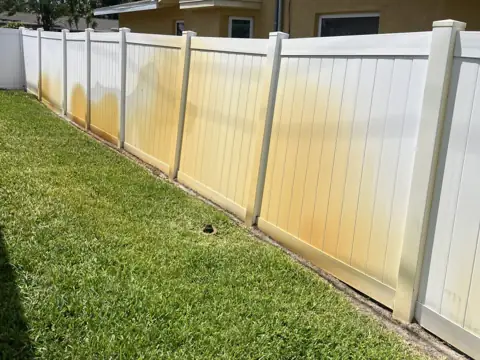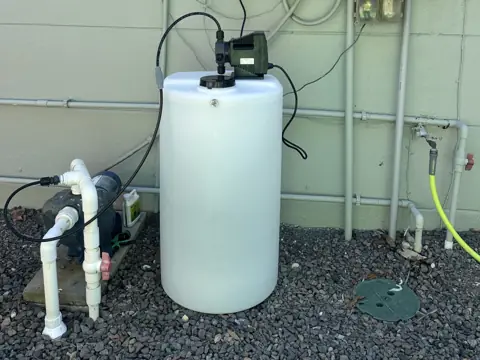
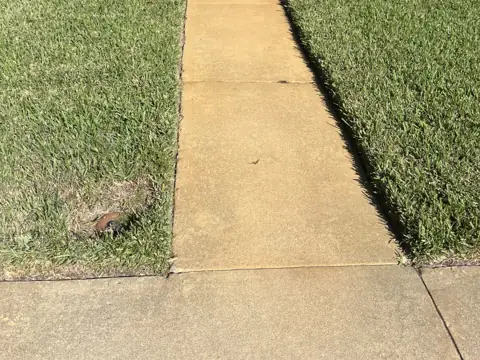
The short answer
Existing sprinkler rust stains can usually be removed completely: a proper rust remover dissolves the iron oxide instead of just lightening it. But removal is not permanent if the cause is still there. As long as the sprinklers keep spraying iron-rich water on the same surface, new orange will form. Permanent results come from removing the stains and stopping the iron from staining again.
Two different problems: the stain and the source
It helps to separate what you see from what causes it.
- The stain is iron oxide sitting in or on the surface. On porous concrete it settles into the top of the slab; on vinyl it sits in the finish. This part can be removed.
- The source is dissolved iron in your irrigation water, most often from a private well. Every time a zone runs, water lands on the surface, dries, and the iron oxidizes into a new layer of orange.
Cleaning only addresses the first. That is why many homeowners have the experience of a driveway or fence looking perfect for a few weeks and then slowly turning orange again in the same pattern as before.
How completely can existing stains be removed?
On most surfaces we work on, very completely. A treatment made for iron stains reacts with the rust and lets it rinse away, which is different from scrubbing or pressure washing, which mostly move what is on top. A few things affect how close to “like new” a surface gets:
- How long the staining has built up. Years of layered staining can need a second pass. Light, recent overspray usually comes off in one.
- The material. Vinyl and broom-finish concrete respond well. Colored concrete, sealed pavers, painted surfaces and acid-sensitive stone like travertine need more testing and care, and occasionally the safest result is a big improvement rather than perfection.
- Earlier cleaning damage. If high pressure has already etched the concrete, the etching stays even after the orange is gone.
- Mixed stains. Mildew, dirt and algae on top of rust are a separate cleaning job. They can make a surface look stained even after the iron is out.
We look at the surface before we start and tell you what to expect, rather than promising every stain on every material will disappear.
Why the orange comes back
Return speed depends on three things: how much iron is in the water, how long and how often the zone runs, and how much of that water lands on the surface. A fence that sits directly in front of a rotor may show a faint band again within weeks. A driveway edge that only catches the tail of a spray pattern may take months. But on untreated well water, the direction is always the same.
This is also why turning up the pressure washer or switching cleaning products does not change the long-term result. The surface is fine; the water keeps putting iron on it. Our guide on why pressure washing doesn’t remove sprinkler rust explains the cleaning side in more detail.
What actually makes the result last
There are three practical ways to keep a cleaned surface clean, and they work best together.
1. Keep water off the surface
Adjusting or replacing heads so they water the lawn and beds instead of the driveway, fence or wall reduces how much iron lands on the surface. It rarely solves the problem alone, because wind, overspray and runoff still reach hardscape, but it slows staining down. See our guide to adjusting sprinkler heads to reduce rust stains.
2. Treat the irrigation water
An irrigation rust prevention system feeds a measured amount of rust-control solution into the irrigation water while the sprinklers run, so the iron does not oxidize into orange on your surfaces. This is the step that turns a one-time cleaning into a lasting result on well water.
3. Keep the treatment running
Prevention only works while the system has solution, power and the right dosing. A tank that runs dry or a pump that loses power after a storm lets staining start again. That is why we refill and check systems on a monthly schedule.
The right order: remove first, then prevent
Prevention does not remove stains that are already there, so for a property that is already orange the sequence is usually:
- Test the irrigation water to confirm iron is the cause.
- Remove the existing staining from the affected surfaces.
- Install prevention on the irrigation and set the dosing to the watering schedule.
- Keep the system refilled and checked so the clean surfaces stay clean.
If you are on reclaimed or city water, prevention is usually not needed, and the question is more about overspray and the specific stain. See does reclaimed water cause rust stains?
When to call a professional
Small, light stains on vinyl or plain concrete are a reasonable DIY job with a product made for rust stains and careful label reading. It makes sense to bring in a specialist when the staining is heavy or old, the surface is colored, sealed or natural stone, the area is large, or the stains keep returning and you want the source dealt with too.
We remove irrigation rust and install and maintain prevention systems across Tampa Bay, from Clearwater and Largo to St. Petersburg and Tampa. Start with irrigation rust removal or read removal vs. prevention if you are not sure which you need.