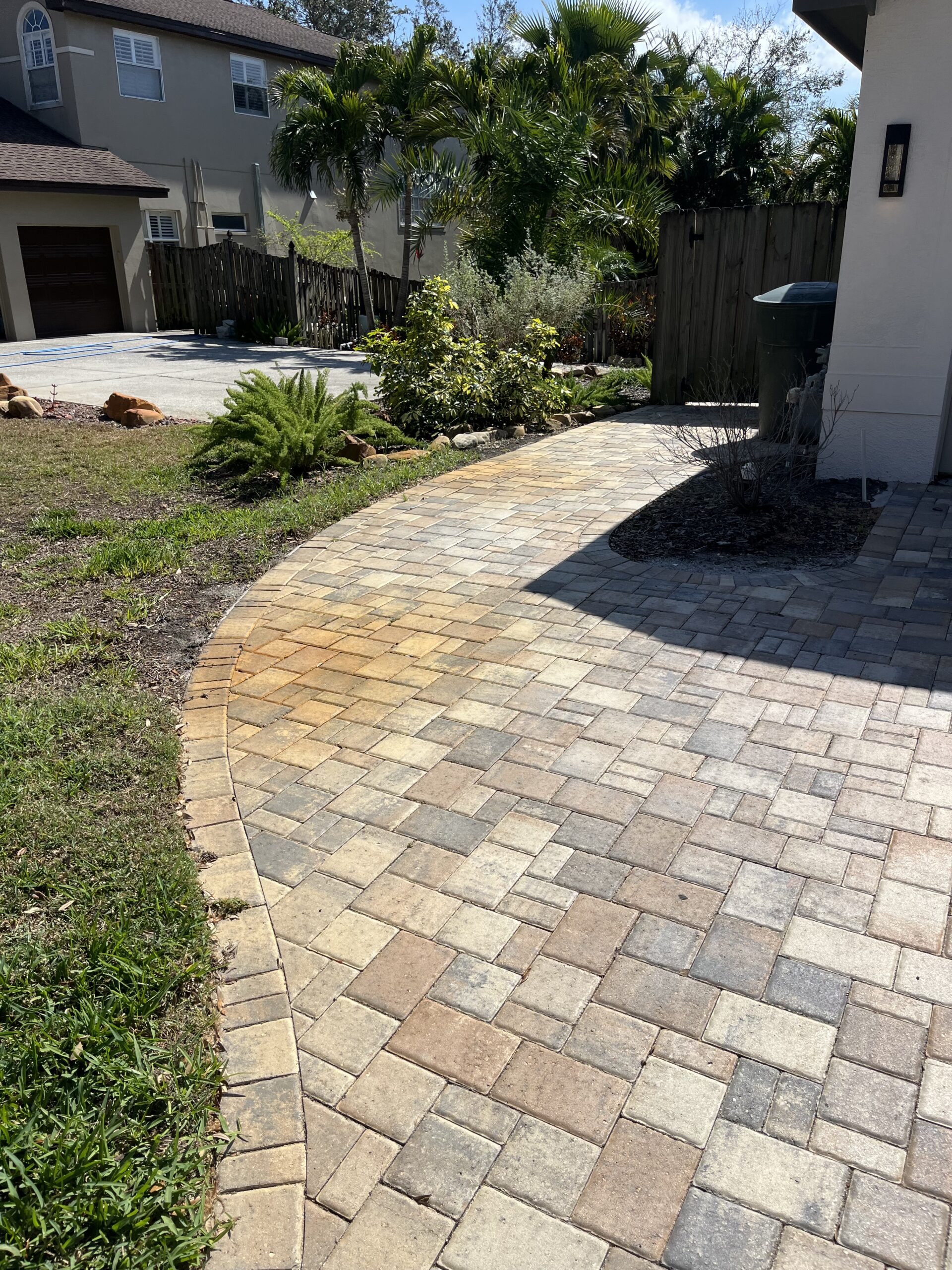
Irrigation rust is usually most noticeable as a cosmetic problem: orange and brown mineral stains that make otherwise clean surfaces look neglected. The bigger risk often comes from using the wrong removal method rather than from the stain itself.
Concrete
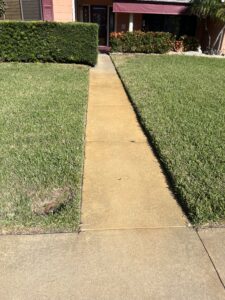
Concrete is porous, so iron staining can settle into the surface. Aggressive pressure can etch the concrete and leave permanent cleaning marks. A rust-specific treatment is usually a better starting point than simply increasing pressure.
Pavers
Pavers can vary widely in material, finish, age, and whether they are sealed. Strong chemicals or excessive pressure can affect the appearance of the surface, so treatment should be adjusted to the material.
Vinyl Fencing
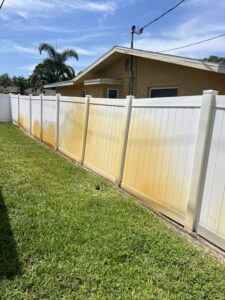
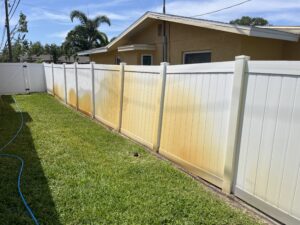
White vinyl fencing shows irrigation rust very clearly. The surface itself may still be structurally fine, but harsh scrubbing, abrasive tools, or unnecessary pressure can create cosmetic damage.
Stucco and Painted Surfaces
Stucco and painted exterior walls require more caution because the finish can be damaged by aggressive pressure or overly strong treatment. Testing is especially important on older or delicate surfaces.
The Safest Approach
The goal of professional irrigation rust removal is to target the iron staining while protecting the underlying surface. The process should be adapted to the material rather than treating every area the same way.
Preventing New Stains
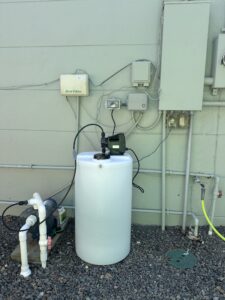
If iron-rich sprinkler water keeps reaching the cleaned surface, new staining can return. An automatic prevention system can help address that recurring source.