
The short answer
Irrigation rust on brick, stone veneer and natural stone can often be removed, but these materials need more caution than concrete or vinyl. Many rust removers are acid-based, and limestone-family stones like travertine, marble, coquina and many limestone veneers are sensitive to acids, so the wrong product can etch or dull them. Brick is usually more forgiving but can have soft mortar, sealers or a painted face. Identify the material, test a hidden spot, and when the stone is valuable or unusual, consider a stone specialist.
Where you see it
- Brick and stone veneer on house fronts and columns next to planting beds.
- Stone or brick mailbox posts and entry columns in irrigated turf.
- Decorative garden walls, planters and borders.
- Natural stone patios and pool decks, including travertine. See pool deck rust removal.
- Monument signs and community entrance walls clad in stone or brick.
How the materials differ
Brick
Fired clay brick is relatively durable, but it is porous, so iron settles in. The mortar joints are usually the weakest point; they can be softer than the brick and are often where rust stains sit heaviest. Painted or sealed brick behaves like a painted surface: test first.
Limestone-family stone
Travertine, marble, many limestones and Florida’s coquina are calcium-based and react with acids. That is why rust removal on these needs a non-etching approach, careful testing and sometimes a specialist.
Granite and similar stone
Harder silicate stones are generally less acid-sensitive, but polished finishes, resins and sealers can still be affected. Iron-bearing stone can also have natural orange tones that are not stains at all.
Manufactured stone veneer
Cast stone veneer is concrete-based and often colored on the surface. Aggressive treatment can lighten the color, so testing matters.
Dos and don’ts
- Do identify the material before choosing a product.
- Do test a hidden spot and look at it once completely dry.
- Do pre-wet and protect plants, and rinse thoroughly.
- Don’t use muriatic acid or general-purpose acid cleaners on stone. They can permanently etch it.
- Don’t pressure wash mortar joints at close range. It can erode mortar and drive water into the wall.
- Don’t assume orange in stone is a stain. Some stone contains iron minerals that are part of its natural color.
When to call us, and when to call a stone specialist
We remove irrigation rust from brick, stone-veneer sign bases, columns, walls and many hardscape surfaces, with testing first. For polished or high-value natural stone, historic masonry, or stone that has already been etched, a stone restoration specialist may be the better choice, and we will say so rather than risk the surface.
Preventing it
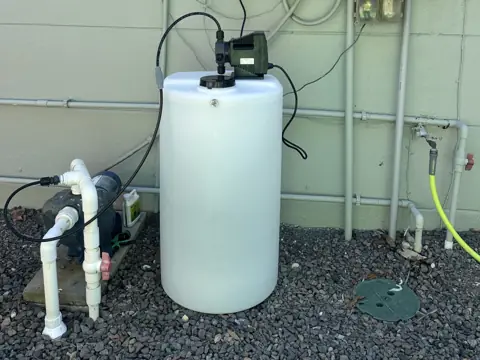
Stone and brick are among the hardest surfaces to clean, which makes prevention especially worth it. Keep spray off walls and columns by adjusting heads or converting nearby beds to drip, and on well water, treat the irrigation with an irrigation rust prevention system. See adjusting sprinkler heads for practical tips, and rust on commercial signs and entrances for stone and brick monuments.