The short answer
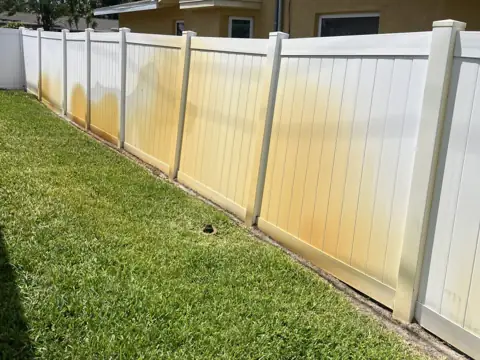
Sealing concrete or pavers after rust removal can make the surface easier to clean and help pavers hold their color, but it does not prevent irrigation rust. If iron-rich water keeps landing on a sealed surface, the orange forms on top of or in the sealer, and the sealer can make it harder to remove later. Seal for the surface’s sake if you want to, but only after the rust is completely out, and do something about the water if you want the stains to stay gone.
What sealer does and does not do
- Does: reduce how quickly dirt and liquids soak into concrete, help paver colors look richer, stabilize joint sand on some paver systems, and make routine cleaning easier.
- Does not: stop dissolved iron in irrigation water from oxidizing into orange when it dries on the surface.
In other words, sealer changes where the stain sits, not whether it forms.
The risks of sealing over rust
- Locking in leftover staining. Any rust left in the surface is sealed underneath and becomes much harder to reach.
- Staining in the sealer layer. New iron can discolor the sealer itself, which may mean stripping it to get the orange out.
- Uneven appearance. Sealer applied over partly cleaned concrete can make the difference between clean and stained areas more obvious.
- Trapped moisture. Sealing before the surface is fully dry after cleaning can cause cloudiness on some products.
When sealing makes sense
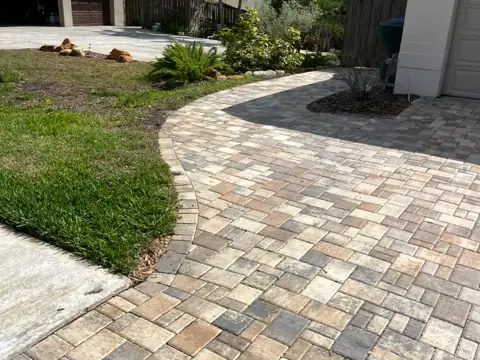
- Pavers that were already sealed and needed heavy treatment: resealing can restore an even look.
- Decorative, stamped or colored concrete where sealer is part of the finish.
- Surfaces that are out of the spray pattern or on treated water, where the goal is easier cleaning, not rust prevention.
The right order
- Remove all the rust first, including a second pass on heavy areas. See driveway rust removal and paver rust removal.
- Rinse thoroughly and let it dry completely before any sealer goes down. Follow the sealer manufacturer’s guidance on dry time and conditions.
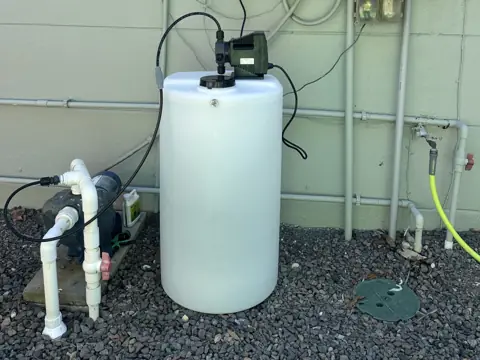
- Fix the water source. Adjust heads off the surface, and on well water, add rust prevention.
- Seal with a product suited to the surface, if you want the other benefits.
Rust on a surface that is already sealed
Rust on sealed pavers or concrete can often still be removed, but the sealer changes how the stain and the remover behave, so test first. In some cases the staining is in the sealer layer and the best result means stripping and resealing. We look at sealed surfaces before we quote, and we will tell you which situation you are in.
Bottom line
Sealer is surface protection, not rust protection. For a driveway, patio or pool deck that stays clean, the steps that matter are removing the rust completely and keeping iron-rich water off the surface. Read how to stop sprinklers staining a new driveway or patio for the prevention side.