The short answer
Commercial properties irrigated with well water stain on a cycle: landscape heads put iron on signs, walkways and walls every watering day, someone pays to clean it, and it comes back. A long-term rust control plan breaks that cycle by pairing one-time restoration with prevention on the irrigation and a maintenance schedule, budgeted like any other recurring property service. It usually costs less over a few years than repeated emergency cleanings, and it keeps the property presentable all the time instead of just after a cleaning.
Who this applies to
- Property and facility managers responsible for one site or a portfolio.
- Community associations and condo boards with shared irrigation.
- Retail and shopping centers with landscaped islands, signs and storefront walks.
- Medical and professional offices where the entrance shapes first impressions.
- Churches, schools and other institutions with large irrigated grounds.
One-time restoration vs. ongoing prevention
One-time restoration
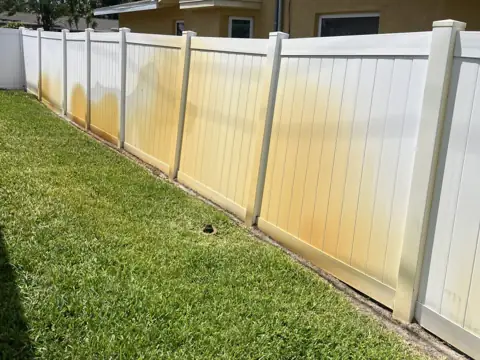
Removing the staining that is there now. On a commercial site, this usually means signs, entrance walks, curbs, building walls and fencing, often worked in sections so the property stays open. It resets appearance but does nothing about the next watering.
Ongoing prevention
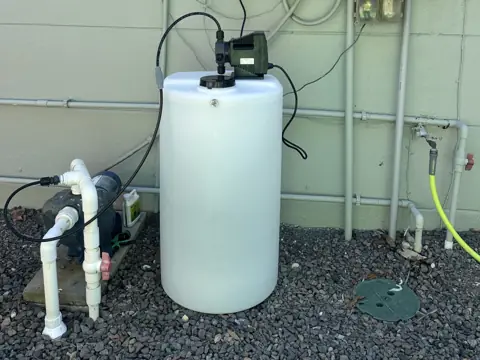
Treating the irrigation water so new staining does not form, with refills and checks on a fixed schedule. It is the part that keeps the restoration from being wasted.
Most properties need both, in that order. See removal vs. prevention for the general comparison.
What a good plan includes
- A site walk mapping where the staining is and which irrigation sources cause it.
- A water test for each well that feeds sprinklers.
- A written scope: removal by area, prevention for each irrigation source, and the maintenance schedule.
- Phasing so work fits around tenants, customers and budget cycles.
- A refill and inspection schedule for every system, with early visits if something fails.
- A process for irrigation changes, so the landscaper and the rust control provider are not working against each other.
Budgeting it
- Capital or project cost: initial restoration and system installation.
- Operating cost: solution, refills and inspections, budgeted monthly or annually like landscaping or pest control.
- Avoided cost: the repeated cleanings, rushed pre-inspection work and tenant complaints that go away.
Every property is different, so we do not publish flat prices. A site walk and water test let us give you real numbers for each line. Our guides on prevention cost and removal cost explain the factors.
Maintenance is where plans succeed or fail
The most common way commercial rust control fails is not the equipment; it is the handoffs. A landscaper adds a zone or changes the schedule, a storm knocks out power to the pump, or a new manager does not know the system exists. A plan that names who refills, who checks the pump and who gets told about irrigation changes avoids most of that. See year-round prevention maintenance.
A real example
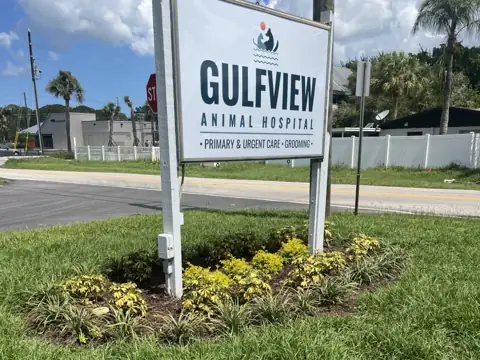
At Gulfview Animal Hospital in Port Richey, a large landscaping project with new irrigation on an iron-rich well caused staining across the property, including the monument sign at the entrance. We removed the staining and installed a prevention system on the well so the new landscaping would not stain the property again. See our projects.
Getting started
Start with commercial irrigation rust removal or HOA and commercial rust control. We are licensed and insured, can provide a certificate of insurance and schedule around business hours.