The short answer
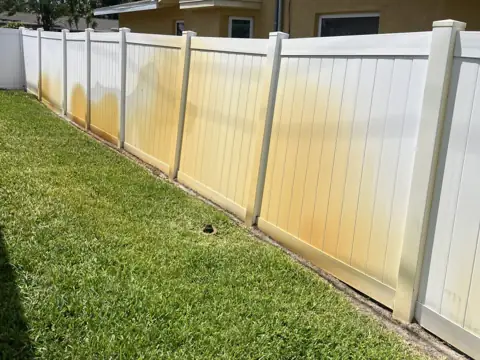
Orange or rusty-brown stains low on your house siding, in bands or fans that line up with sprinkler heads, are most likely irrigation rust from iron in well water. Siding can also stain from soil splash, metal fixtures, gutters and fertilizer, so look at the pattern before you pick a cleaning method. Then match the method to the siding: vinyl, painted fiber cement, painted wood and stucco all handle rust removers differently.
Signs your sprinklers are the cause
- The staining starts at ground level and fades upward, often to the height the spray reaches.
- It is darkest behind or beside specific heads, especially rotors and full-circle sprays near the house.
- The same orange appears on the foundation, walkway, driveway edge or a nearby fence.
- Your irrigation runs on a private well.
- It slowly gets worse, rather than appearing after one event like a storm.
Other causes that look similar
- Gutter and downspout staining: streaks from the top down, usually at corners and under downspouts.
- Metal fixtures: narrow streaks below hose bibs, light fixtures, AC brackets, nails or screws.
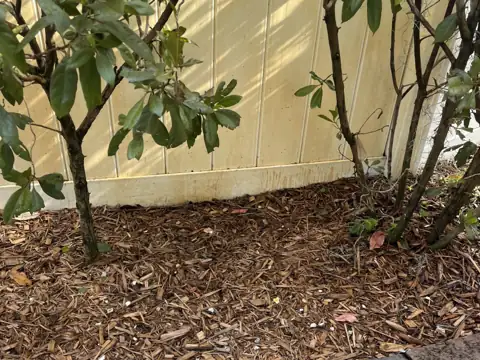
- Soil and mulch splash: reddish-brown in the bottom few inches, worse after heavy rain, matching bare beds.
- Mildew: green, gray or black, usually on shaded walls.
- Fertilizer: scattered orange speckles where granules or spray reached the wall.
Vinyl vs. painted vs. stucco: why it matters
Vinyl siding
Like a vinyl fence, vinyl siding is non-porous, so rust sits in the surface and usually responds well to a remover made for iron stains, applied gently and rinsed well. Abrasive pads and high pressure are the main risks: they dull the finish and can force water behind the panels.
Painted fiber cement and wood
Paint changes everything. Some rust removers can affect the sheen or color of a painted finish, especially older or chalky paint. Test a hidden spot first, and expect that on some paint the safest result is lightening rather than perfect removal, with repainting the cleaner long-term option.
Stucco
Stucco is porous and textured, so iron settles into it more like concrete. It needs careful application, especially on painted stucco. See removing irrigation rust stains from stucco walls.
Inspect before you clean
- Identify the siding material and whether it is painted.
- Check the pattern against the sprinkler heads by running one zone.
- Look for damage: cracked caulk, gaps or loose panels where water could get behind the siding.
- Test any cleaning product in a spot no one will see, and look at it once dry.
- Protect plants, windows, doors and nearby vehicles before applying anything.
Avoid pressure washing siding at close range. On vinyl it can drive water behind the panels; on painted surfaces it can lift paint; on stucco it can damage the finish. It also rarely removes iron.
Fixing the source
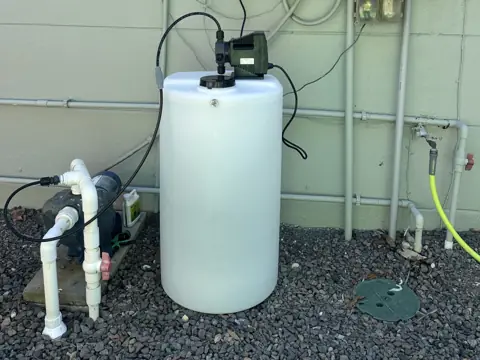
Sprinklers should water plants, not walls. Redirecting heads that spray the house and keeping a gap between the spray pattern and the foundation reduce staining and keep water off the structure. If your irrigation runs on well water, an irrigation rust prevention system keeps new stains from forming on the siding and everything else the water touches.
When to call us
If the staining is heavy, the siding is painted or stucco, it runs along a large part of the house, or it keeps coming back, professional irrigation rust removal is the safer route. We work across Tampa Bay, including Clearwater, Largo and St. Petersburg.