The short answer
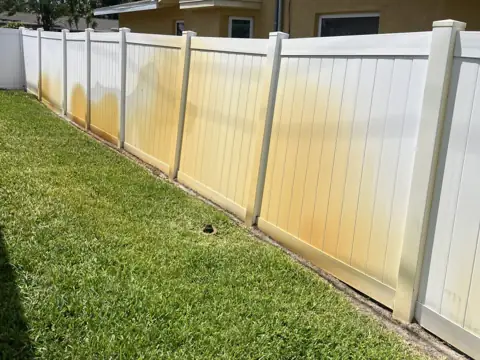
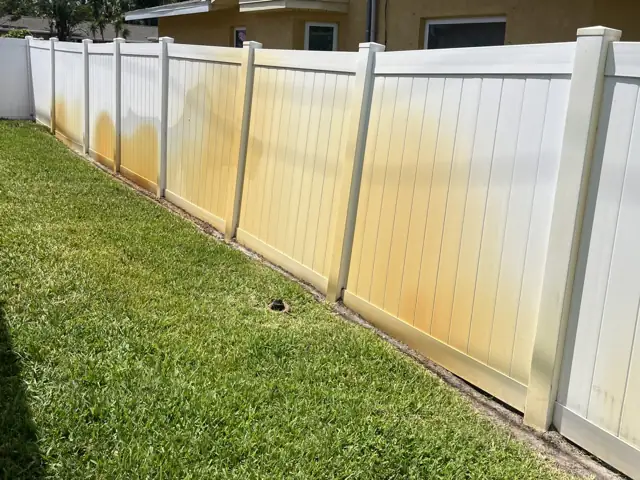
A white vinyl fence that is turning orange along the bottom, in bands or patches that line up with your sprinkler heads, is almost always irrigation rust: iron from well water that dries on the vinyl and oxidizes. Other things can tint a fence, like red clay splash, mildew, fertilizer or rust from metal hardware, but they leave different patterns. Figure out which one you have before you clean, because the fix is different.
How to tell what is staining your fence
Irrigation rust
- Orange to rusty brown.
- Heaviest at the bottom of the panels, fading upward.
- Darkest directly in front of a sprinkler head; sections out of range stay white.
- Gets worse over weeks and months, not overnight.
- Often shows on the house wall, driveway or walkway hit by the same heads.
Mildew and algae
- Green, gray or black rather than orange.
- Worst on shaded, north-facing sections and areas that stay damp.
- Wipes or washes off fairly easily with a cleaner made for mildew.
Soil and red clay splash
- Reddish-brown, concentrated in the bottom few inches.
- Lines up with bare soil or mulch beds rather than spray patterns.
- Often has a speckled, splashed look after heavy rain.
Rust from hardware
- Streaks running down from hinges, latches, screws or a metal post cap.
- Narrow, vertical and starting at a single point.
Fertilizer
- Small orange dots or specks, often on the lower panels near beds that were fertilized.
- Iron-containing fertilizer granules or spray that landed on the vinyl. See fertilizer stains vs. sprinkler rust.
A quick at-home check
Watch one zone run. If the heads that spray the fence are exactly where the orange is darkest, you have your answer. If the stain is on a section the sprinklers never reach, look at soil splash, mildew or hardware instead. And if your irrigation comes from a private well, irrigation rust is the most likely cause. Our guide on telling if your irrigation water has iron covers other signs.
Common mistakes that make it worse
- Bleach. It is for mildew and algae. It does nothing to rust and can harm the plants below.
- Magic erasers and abrasive pads. They can dull the vinyl’s finish so the fence looks patchy even after the orange is gone.
- High-pressure washing. It rarely removes iron and can damage panels and the beds at the base.
- Cleaning without fixing the source. On well water, the band starts forming again with the next watering.
Removing it
Vinyl is not porous like concrete, so irrigation rust usually comes off well with a rust remover made for iron stains, a soft touch and a thorough rinse of the fence and everything under it. Our step-by-step guide is how to get irrigation rust off a vinyl fence. For long fence lines, fences behind dense beds, pool fencing or HOA perimeter fencing, professional fence rust removal saves time and protects the landscaping.
Keeping it white
- Redirect heads so they water the beds and lawn, not the fence. Swapping a full-circle head for an adjustable arc often helps. See adjusting heads to reduce rust.
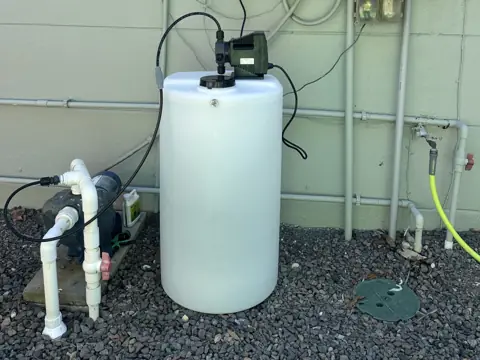
- Treat the water if you are on a well. An irrigation rust prevention system stops new staining at the source.
- Keep up with it. A light band is easier to remove than years of buildup.
White vinyl is one of the most common surfaces we clean across Tampa Bay, from single backyard fences in Largo and Seminole to perimeter fencing in Clearwater and Palm Harbor communities.